
NEWS
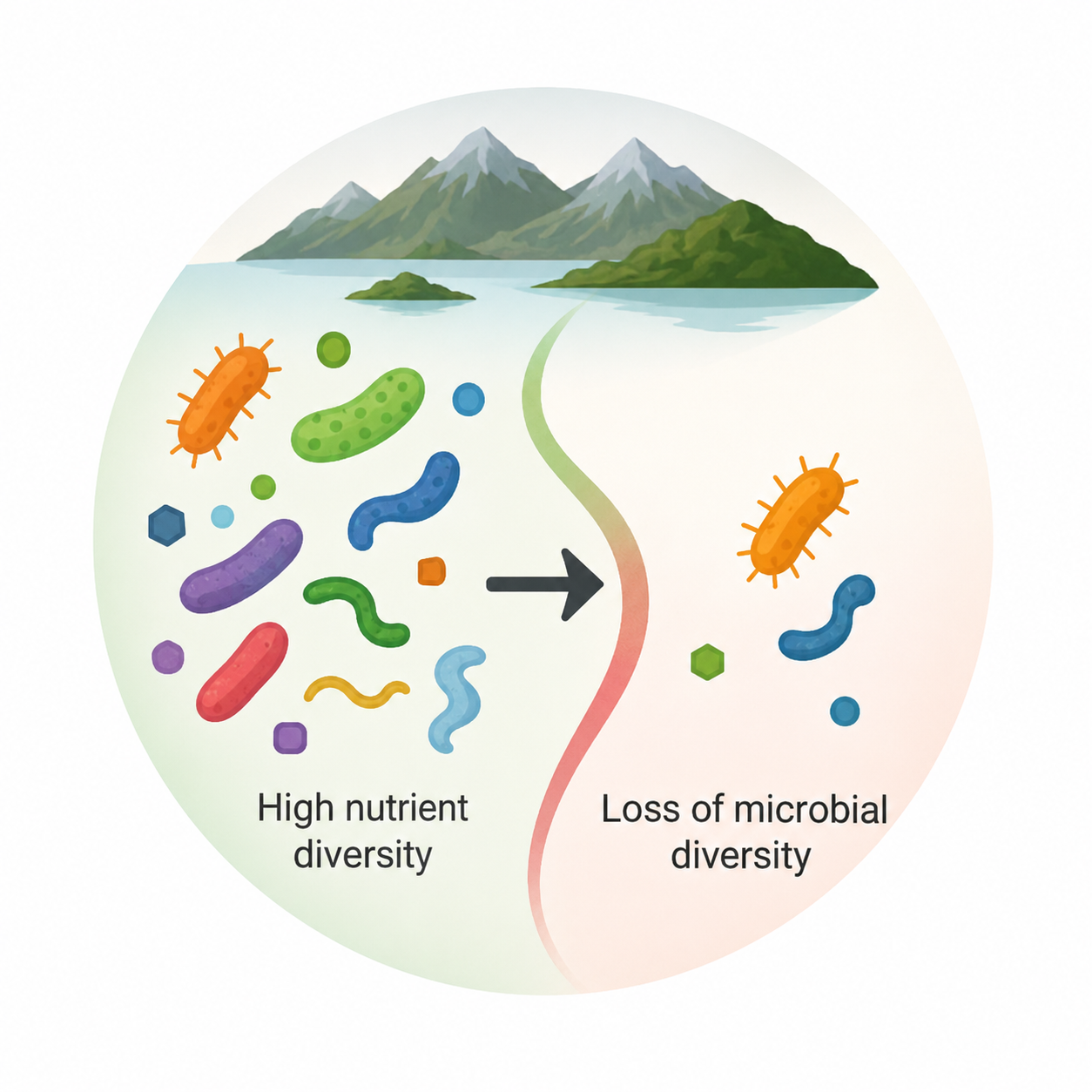
July, 2026: We got a new publication in Nature Ecology and Evolution, showing that more nutrient diversity can surprisingly reduce microbial biodiversity.

June, 2026: Magnus joined us as a Master Student to figure out how we can functionally optimize microbial communities.
November, 2025: Shubham's recent ISME paper has been selected as an Editor's pick. We’re grateful to the ISME Editors for this recognition.
August, 2025: We got a new paper out in ISME J . Bacteria can produce an externalized memory by modifying their environment.
 news archive
RECENT SELECTED PUBLICATIONS
O. Shalev, X. Ye, J. Kilian, M. Stahl, C. Ratzke
"Increased nutrient diversity can induce loss of microbial diversity through enhanced resource uptake"
Nature Ecology and Evolution (2026)
S. Gajrani , X. Ye , C. Ratzke
"Environment-mediated interactions cause an externalized and collective memory in bacteria"
ISME J wraf173 (2025)
X. Ye, O. Shalev, C. Ratzke
"Biotic resistance predictably shifts microbial invasion regimes"
Nature Communications 16, 3952 (2025)
C. Ratzke*, J. Barrere*, J. Gore
"Strength of species interactions determines biodiversity and stability in microbial communities"
Nature Ecology and Evolution 4, 376–383 (2020)